Concrete and Pavers in Brentwood, CA
Driveways, patios, walkways and repairs for homes in Brentwood, Oakley and Antioch. Tell us what you're planning and request a quote.
- No obligation to hire
- Written price after measuring
- Straight answers on cost and options
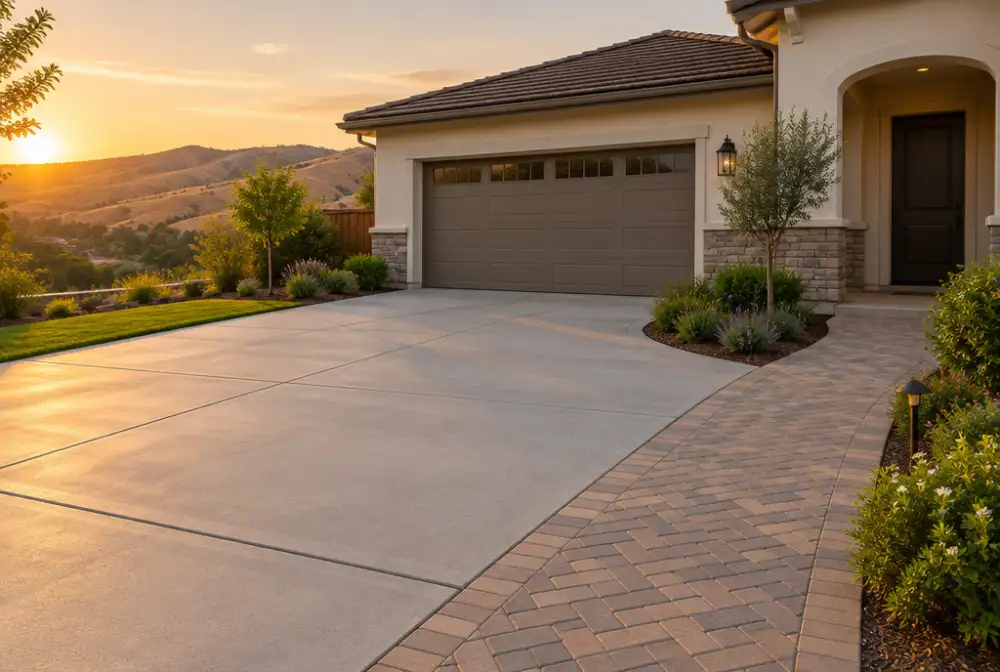
What are you working on?
Pick the closest match. Each page explains the job, what drives the price and what to ask before you sign.
Wide planning ranges, installed, before removal of an old surface. Your price comes from a written quote after measuring. Common sizes are in the concrete cost guide and paver cost guide.
Concrete or pavers: the short answer
Choose plain concrete when the budget matters most and a clean, simple surface suits the house. Choose pavers when you want pattern and color, and the ability to lift and reset a section later instead of patching a slab. Stamped concrete sits between them on price and needs resealing every 2 to 3 years.
| Plain concrete | Stamped | Pavers | |
|---|---|---|---|
| Installed, per sq ft | $4–$25+ | $8–$25+ | $8–$45+ |
| When it cracks | Patch or replace panels | Patches are hard to match | Lift and reset units |
| Upkeep | Low | Reseal every 2–3 years | Joint sand, optional sealing |
Planning ranges, not quotes.
Quick picks
- Long driveway, tight budgetPlain broom-finish concrete. Put the savings into thickness, base and joint layout.
- Backyard patio you'll look at every dayPavers or stamped concrete. Pavers cost more but repair cleanly.
- HOA neighborhoodCheck color, pattern and material rules with your HOA before you choose.
What Brentwood's ground and weather do to a slab
The same driveway is a different job here than on the coast. These are the local conditions worth raising before you sign.
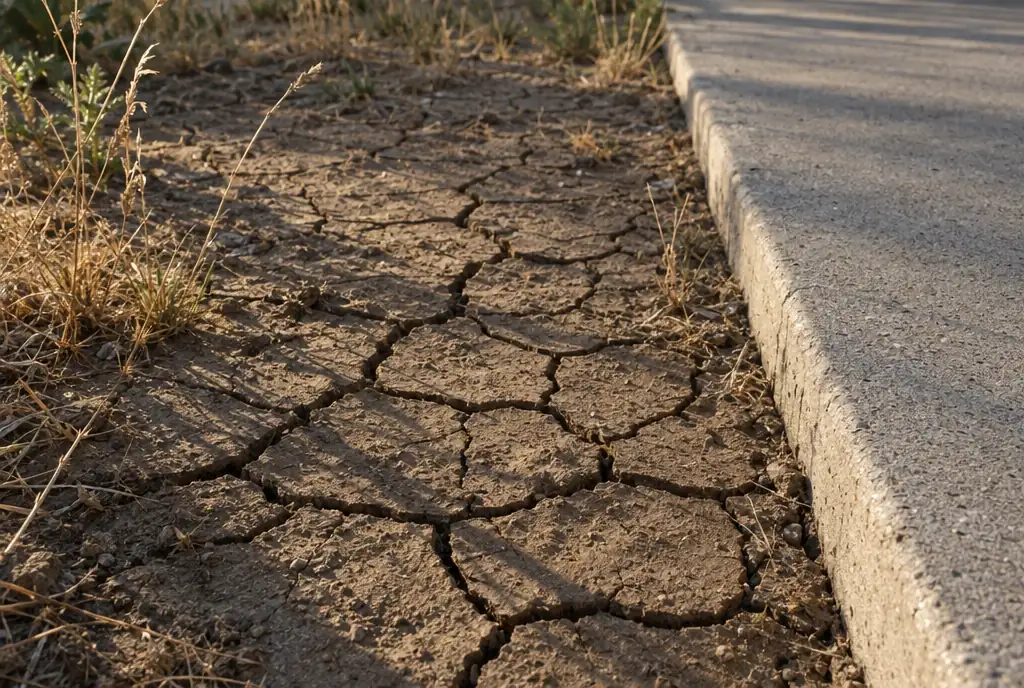
- Clay ground that moves with moistureThe Brentwood soil series is named for this area. USDA describes it as a clay loam with roughly 35 to 40 percent clay and moderately slow permeability, and classifies its clay as smectitic (USDA), the type that swells when wet and shrinks as it dries (background). Soil varies lot to lot, so ground preparation and compaction under the slab or pavers matter.
- Long, hot pour seasonBrentwood's hot season runs from about early June to early October, with July highs averaging 90°F (Weather Spark). Hot, dry, windy weather speeds evaporation and raises the risk of early shrinkage cracks, which is why the concrete industry advises avoiding the hottest part of the day, dampening the subgrade and curing the slab properly (NRMCA). Pour timing and curing should be part of the plan.
- Wet winters on slow-draining soilMost rain falls between early October and mid-May, with February the wettest month (Weather Spark). On clay that drains slowly, slope away from the house and a sound base matter. Paver guidance allows a geotextile over clay and calls for thicker bases on weak or wet soils (CMHA).
- Mostly newer homes, mostly original flatworkBrentwood went from 7,788 housing units in 2000 to 21,228 in 2020 (MTC census data), so nearly two-thirds of today's homes were added after 2000. Many driveways and patios here are the originals poured with those homes. If yours is original, nobody may know how thick it is or what is under it, so it is worth checking before choosing between repair and replacement.
- The apron and sidewalk are yours to maintainBrentwood's code makes the owner next to a sidewalk responsible for repairing it, and counts the curb, parking strip and driveway approach as part of the sidewalk, except damage caused only by city-planted trees (BMC 12.12.010). Work in the public right-of-way needs an encroachment permit from the city engineer (BMC 12.08). If your project touches the apron, curb or sidewalk, the permit should be part of the job; the City of Brentwood has the details.
Before you sign anything
A good written quote names the thickness or base depth, reinforcement, joint layout, finish, who hauls away the old surface, and the warranty terms.
Check any contractor's license
Look up a California contractor's license status and any complaint disclosures on the CSLB license check before you sign.
Common questions
Is it cheaper to do a paver patio or concrete?
Concrete is usually cheaper up front. For planning, plain concrete runs roughly $4 to $25+ per square foot installed and pavers roughly $8 to $45+. Pavers can be repaired one unit at a time. The cost guides show common sizes.
How much does a 20x20 concrete driveway cost?
A 20x20 driveway is 400 square feet. For planning, expect roughly $2,400 to $10,000+, depending on thickness, base work, finish and whether an old slab comes out first. A written quote after measuring gives the actual price.
Can a cracked concrete driveway be repaired?
Often, yes. Hairline cracks and light surface wear can usually be sealed, patched or resurfaced. Wide cracks, panels that have sunk or tilted, and crumbling concrete usually mean replacing the affected panels. See the repair and resurfacing guide.
Why do concrete driveways crack in Brentwood?
Concrete shrinks as it cures and dries, and control joints are cut so it cracks along them. Local clay soil, which swells when wet and shrinks when dry, and pours in summer heat add stress. Good base preparation, joint spacing and curing reduce cracking but cannot rule it out.
Areas covered
Homeowners across the eastern end of Contra Costa County, along Highway 4 and the Delta.
Ready to price your project?
Tell us what you're planning. You'll get a call back to talk through the project and set a time to measure.
- Send the short form or call. Project type, rough size and your city are enough.
- Talk it through. A local concrete and paver pro calls to ask a few questions about the job.
- Get a written quote. After measuring, the contractor gives you a written price. No obligation to hire.